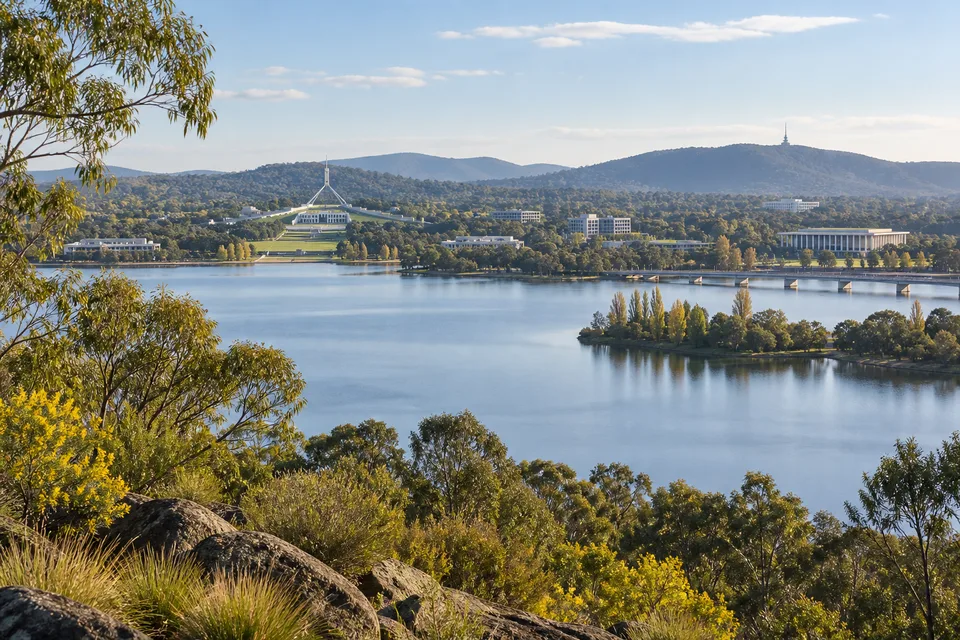
Canberra is Australia’s national capital, but it is not a single-purpose museum district. Official visitor guidance points to national museums and galleries, local arts and heritage, food and drink, First Nations experiences, cycling and nearby nature as parts of the same visit. The city sits on Ngunnawal Country, and a useful first plan is to choose a few complementary precincts rather than trying to cross every attraction off in a day.
Start with the experience you actually want
VisitCanberra’s things-to-do guide (opens in a new tab) groups the city’s options into museums and galleries, outdoor adventures, events, First Nations experiences, food and drink and family activities. That is a better planning frame than a generic capital-city itinerary: a gallery morning may pair well with a lakeside stop, while a reserve walk needs its own weather, access and daylight allowance. Current exhibitions, programmes and restaurant availability should be checked with the relevant operator before you build a day around them.
Make room for national institutions and local layers
Canberra’s national attractions are a clear reason to visit, but the official guide also identifies local galleries, heritage places, vineyards and neighbourhood dining. The practical advantage is proximity rather than a promise that every stop is walkable: choose one or two anchor experiences, then use current maps and transport information to connect them. For First Nations art, history or tours, use the specific institution or approved local provider’s current information and approach Country with the respect those settings require.
Nature is part of the city, not an afterthought
Canberra Nature Park consists of 39 reserves in and around Canberra. Parks ACT says they protect habitats, heritage places and ecological connections while providing opportunities for walking, wildlife observation, birdwatching, cycling, picnics and other activities where permitted. Individual reserves differ, and some activities are restricted or prohibited to protect natural and cultural values. Stay on marked tracks, leave plants, animals, rocks and heritage material undisturbed, and use the specific reserve page before setting out.
Plan outdoor time with current information
Parks ACT advises visitors to bring drinking water, carry a phone, tell someone their route and return time, and be alert to bushfire conditions. Its safety guidance (opens in a new tab) and live alerts (opens in a new tab) page are essential checks before a longer walk or a trip beyond the central precincts: closures, access routes, prescribed burns and weather impacts are date-specific. Do not treat a general guide as a substitute for those day-of checks.
Use visitor help when plans change
The Canberra and Region Visitor Information Centre at Regatta Point offers trip-planning assistance, booking information, bike hire and current local advice. VisitCanberra lists it as open 9am to 5pm on weekdays and 9am to 4pm on weekends and public holidays, closed Christmas Day, with a daily quiet hour from 9am to 10am. It also publishes accessibility features including wheelchair access, nearby disabled parking, a hearing loop and screen readers. Confirm current details before relying on a particular service.
A practical rhythm for Canberra
Give each day a clear centre: a national collection or civic institution, a neighbourhood meal or cultural stop, and—when conditions suit—time in the city’s parks and reserves. Canberra rewards that layered approach because it keeps the visitor close to both the national story and the surrounding landscape, while leaving room for current programmes and safe, respectful access to Country.
Sources
Sources last validated: 14 September 2026.